
By Sherwin Prior, CEO/Co-Founder, Juise Mobility
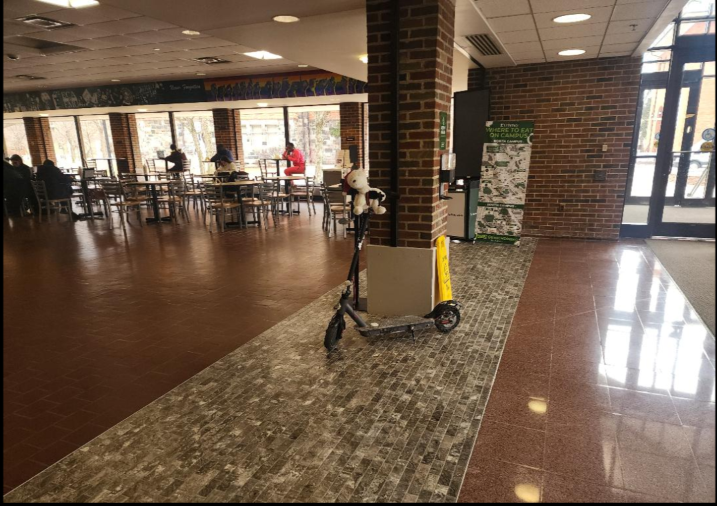
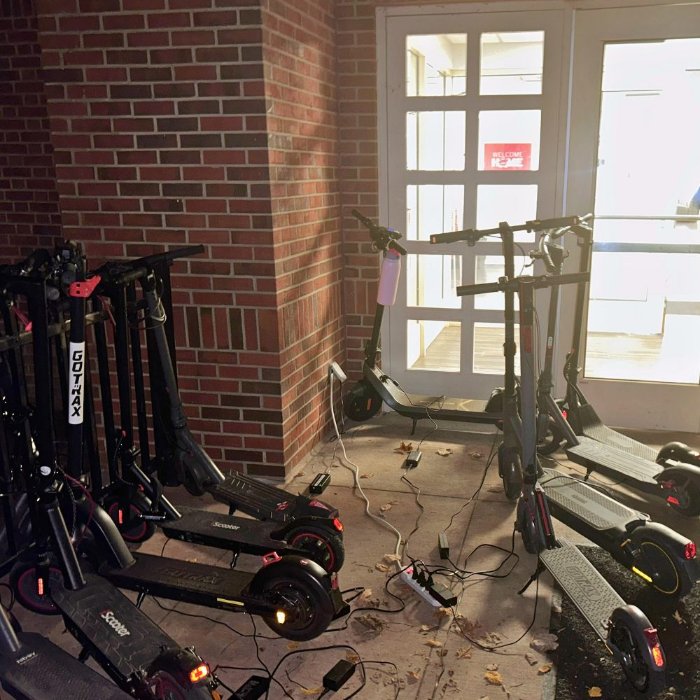
Somewhere in your building right now, whether it’s an apartment complex, a college residence hall, or a commercial office, a lithium-ion battery may be sitting in a hallway, a storage closet, a dorm room, or an entryway a few feet from the only fire exit, plugged in or not. That’s not a hypothetical. It’s the pattern behind one of the fastest-growing fire risks in multi-family housing, student housing, and commercial real estate. And the central issue isn’t charging habits. It’s that these batteries are being stored indoors at all.
The scale is no longer a rounding error.
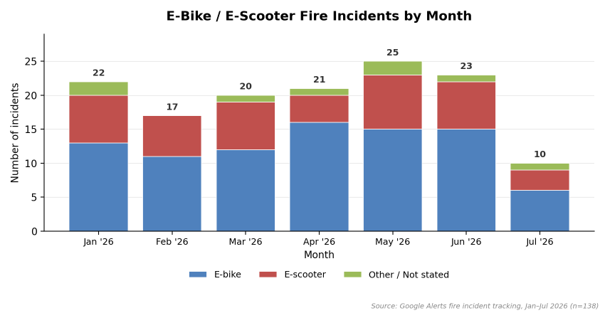
In New York City alone, the FDNY has logged more than 1,000 fires tied to lithium-ion batteries since 2019, causing 34 deaths, over 500 injuries, and damage to more than 650 structures [1]. Nationally, the Consumer Product Safety Commission attributed 19 deaths to micromobility devices between 2017 and 2022 [2], and U.S. fire departments now respond to an estimated 25,600 lithium-ion battery incidents a year, a figure climbing in step with e-bike and e-scooter adoption [3]. In NYC in 2023 alone, 268 of these fires caused 150 injuries and 18 deaths in a single year [4].
It’s not just about charging, and that’s the part most people get wrong.
The instinct is to treat charging as the danger window and everything else as safe. FDNY data says otherwise. According to the City of New York, 59% of 2023’s lithium-ion battery fires started when the battery was not charging: 133 fires ignited while batteries sat idle, compared with 91 that occurred during an active charge [5]. FDNY Commissioner Laura Kavanagh put it plainly: “The reality is that lithium-ion batteries can be dangerous even if they are certified, and even if they are not charging” [5]. One of the department’s own case files makes the point vividly: a May 2024 fire was traced to a moped battery that hadn’t been used or charged in two years [5]. A damaged, aging, or defective cell doesn’t need a charger plugged in to fail. It can vent and ignite while it’s just sitting there.
That doesn’t mean charging is the safe part. Charging is a small fraction of a battery’s day, yet it still accounted for 41% of 2023’s fires, a disproportionate share given how little time batteries actually spend plugged in versus simply stored or in use. Charging remains the single highest-risk window on a per-hour basis. But the FDNY numbers make clear that the real hazard isn’t a charging cord, it’s the battery itself, at any point in its life cycle. That reframes the whole question for property owners, campus housing administrators, and facilities managers alike. The goal isn’t just to get the charging cord out of the hallway. It’s to get the battery, charging or dormant, out of the building’s occupied space as much as possible, whether that’s an apartment corridor, a dormitory floor lounge, or an office break room.
This matters most in exactly the settings where these devices are proliferating fastest: multi-family apartment buildings, college and university residence halls, and commercial buildings with employees who commute or make deliveries by e-bike. All three share the same structural vulnerability: dense occupancy, shared egress paths, and residents or employees who store devices in bedrooms, dorm rooms, or common areas because there’s nowhere else to put them. A college residence hall is arguably the highest-risk environment of all, combining single-stair or single-corridor egress in older buildings, students who may be unfamiliar with battery safety basics, and RA staff without fire-service training, with a device category that, as the data above shows, can ignite with no warning whether or not it’s plugged in.
Why charging still deserves special attention.
Fires that do happen during charging tend to follow a specific failure chain. A damaged cell, a mismatched or off-brand charger, or simple overcharging can push a battery into thermal runaway: an internal chain reaction where cell temperature climbs past roughly 176°F and the battery vents flammable, toxic gas that ignites within seconds [6]. There’s often no warning. Once it starts, water won’t put it out, and the cell can reignite hours later [6]. Physical damage alone (drops, punctures) was behind 42% of the roughly 4,500 e-bike battery fires FDNY tracked in NYC between 2021 and 2023 [4], and that kind of damage often doesn’t show itself until the battery is put under the electrical load of a full charge cycle.
Battery quality helps, but location decides who lives through it.
Even UL 2271/2272-certified batteries can fail, and a lot of what’s on the market isn’t certified at all. A 2023 UL study of illegitimate e-bike batteries found they routinely lacked basic internal protections, such as current-interrupt devices and adequate insulators, making them far more prone to thermal runaway whether they’re charging, discharging, or sitting untouched [7]. The CPSC has specifically warned consumers off third-party batteries sold through online marketplaces, and there’s a growing black market of DIY packs, some built from cells reclaimed out of used disposable vapes, that end up in delivery riders’ devices with no safety testing at all [8]. What makes a lithium-ion fire deadly instead of just damaging is almost always the same: it ignites in a hallway, storage room, or apartment entryway, blocking the one path people need to get out, whether or not anything was plugged in at the time. That’s precisely the pattern regulators are now targeting. NYC’s 2023 law requiring UL-certified devices cut annual e-mobility fire deaths from 18 to one within two years [1], and the CPSC has proposed the first mandatory federal safety standard for micromobility batteries [2]. Certification and enforcement help, but they can’t fully close a supply chain this fragmented, and they don’t do anything about a battery that fails on its own three years after purchase. The lesson for building owners isn’t “better batteries fix this” or even “safer charging fixes this.” It’s “where these batteries live, charging or not, is the variable you actually control.”
Cities are trying bans and certification, but enforcement doesn’t scale to millions of devices
NYC’s Local Laws 39 and 40 made it illegal to sell or lease uncertified e-mobility batteries and devices in the city starting in 2023, backed by a dedicated Lithium-Ion Battery Task Force of FDNY fire marshals and inspectors that issued more than 1,000 violations, 46 criminal summonses, and 16 vacate orders in a single year of enforcement [5]. San Francisco followed in April 2026: its Board of Supervisors voted to ban the sale of uncertified lithium-ion batteries and devices outright, with fines up to $1,000 per violation, after a December 2025 fire at a Golden Gate Avenue building displaced hundreds of residents and killed one [14].
Both approaches treat the problem as fixable at the point of sale, and both run into the same practical wall: certification regimes are enforcement-intensive, and the market they’re policing is growing faster than any city can inspect. Grand View Research projects the U.S. e-bike market to grow at a 15.6% compound annual growth rate from 2023 to 2030, expanding from a $1.98 billion market in 2022 to $7.16 billion by 2030, a trajectory other research firms put in a similar 12%-16.5% range [15][16]. Annual U.S. e-bike imports have kept pace, jumping 72% in a single year, from about 1 million units in 2023 to 1.7 million in 2024 [17]. By one aggregated estimate of annual U.S. e-bike and e-scooter sales from 2020 through 2025, an estimated 12 million or more of these devices have entered the market in just five years. Some share of that total will have been retired or replaced, but turnover in this category tends to run high: nearly half of e-bike owners (48%) report having already replaced a battery, most often due to damage, overheating, or visible swelling, rather than giving up the device entirely [18]. Riders replace the battery and keep riding, so the number of batteries in active circulation keeps climbing rather than shrinking. Each one still needs somewhere to sit when it’s not in use. Layer in e-scooters and the existing installed base already sitting in apartments, dorm rooms, and offices nationwide, much of it purchased years before any certification law existed, and no city fire marshal’s office is going to inspect its way to zero uncertified batteries. NYC’s own experience illustrates the gap: even with a dedicated task force running hundreds of inspections a year, uncertified and mislabeled batteries keep reaching riders through online marketplaces and resale channels that sit outside any single city’s jurisdiction [8].
That’s the practical case for outdoor docking, locking, and charging infrastructure as the more scalable answer alongside certification, not instead of it. A dock doesn’t need to know whether the battery inside it is UL-listed, genuine, or three years past its safe service life. It only needs to keep that battery, whatever its condition, outside the building. Certification and point-of-sale bans are worth pursuing, and they’re clearly saving lives where enforced [1], but they depend on catching every bad battery before it reaches a resident, a bar that gets harder to clear as the market grows. Physical infrastructure doesn’t carry that dependency. It scales with the number of docks a property installs, not with the number of inspectors a city can hire.
Insurers are already re-pricing this risk.
Lithium-ion fires cost more per incident, not just more often: Suncorp, a major property insurer, reported that claims exceeding $500,000 tied to these fires doubled as a share of its large losses, from 9% to 18%, between 2023 and 2025 [9]. Coverage is getting harder to count on, too. Standard homeowners and renters policies (HO-3/HO-4) often carry a “motorized vehicle” exclusion that can leave e-bike and e-scooter damage outside personal property coverage entirely, and insurers can deny even dwelling claims if they decide the fire stemmed from an unapproved charger or modified battery, calling it negligence [10]. That gap doesn’t disappear when a tenant’s device burns down a hallway; it becomes the property owner’s exposure. Landlords and co-op boards are already writing e-bike restrictions into leases, and insurers say they’re “actively analyzing” how to reprice policies around this risk [11].
And the lawsuits are starting.
In June 2026, New Jersey Manufacturer’s Insurance Group sued RAEV Bikes and Amazon after paying out more than $1.6 million on a house fire traced to two RAEV e-bike batteries charging in the homeowners’ garage, a subrogation suit of the kind that follows once an insurer covers a loss and goes after the manufacturer to recoup it [12]. It’s not isolated: similar 2026 filings include a Florida man’s burn-injury suit over an Amazon-sold e-bike that ignited while charging, and an Alabama wrongful-death case after a Rad Power e-bike fire broke out mid-charge [12]. Every one of those filings involves a charging battery, which lines up with the pattern insurers care about most: charging fires may be a minority of incidents, but the FDNY data on where and when the deadliest fires ignite, and the insurance data on where the largest claims come from, both point the same direction. The exposure sits with the battery, wherever it happens to be, and a building owner can only fully control that by controlling where it’s allowed to live.
The realistic options, and why outdoor charging and storage win.
Banning devices doesn’t work, in a dorm or an apartment building alike. Riders, delivery workers, and commuting students depend on them, and a ban just pushes both charging and storage into hidden, unmonitored corners of the building, which is worse, not better.
Indoor charging rooms are an improvement over ad hoc charging in units, dorm rooms, and hallways, but they still put a potential thermal event inside the building envelope, and the FDNY numbers above are a reminder that a room full of dormant batteries carries real risk too, not just the ones plugged in. Doing it safely requires fire-rated construction, dedicated suppression, continuous monitoring, and enough electrical capacity to avoid the daisy-chained power strips that cause fires in the first place [13]. That’s a real capital and operating commitment, and it still leaves the failure mode inside your structure, active charge or not, whether the structure is an apartment tower, a residence hall, or an office building.
Outdoor charging and storage remove the ignition scenario from the building entirely, regardless of whether the battery that fails is mid-charge or has been sitting untouched for months. If a battery fails, it fails away from stairwells, sleeping areas, and flammable interior finishes. Heat and toxic gas vent into open air instead of a shared corridor or dorm hallway. Suppression response doesn’t require evacuating a structure or protecting occupants directly overhead. New York City itself has reached the same conclusion at the policy level: as part of its 2024 Safe Charging Accelerator, the city moved to fast-track approvals for property owners installing outdoor battery charging and swapping cabinets on public sidewalks, with officials citing “getting unsafe devices off the street” and out of buildings as the goal [5]. Outdoor infrastructure is the only option where the worst-case outcome, whenever it happens to occur, doesn’t involve a building’s occupants, structure, or exits at all, whether that building houses tenants, students, or employees.
The bottom line for multi-family, campus, and commercial property owners.
Residents, students, employees, and delivery riders are going to keep using e-bikes and e-scooters, because they’re cheaper and faster than a car for a huge share of daily trips. The real decision in front of property owners isn’t whether that use happens, or even when a battery might fail. It’s whether the battery, charging or not, spends its life twenty feet from someone’s bed or twenty feet from the building. The central message is the same whether the property is an apartment complex, a residence hall, or a corporate campus: indoor storage of these batteries, charging or not, is the risk. Moving both charging and everyday storage outdoors is the single change that turns a battery failure, at any hour, into a maintenance issue instead of a life-safety event.
Sources
[2] CPSC Moves Toward Mandatory Lithium-Ion Battery Standards for Micromobility Products, Buchalter
[3] Examining Fire Safety Hazards of Lithium-Ion Battery-Powered E-Mobility Devices in Homes, FSRI
[4] NYC e-bike fires: 100 fires, 13 deaths linked to bad batteries this year, NBC New York
[6] What Causes Thermal Runaway?, UL Research Institutes
[7] How to Spot a Counterfeit Lithium-Ion Battery, IEEE Spectrum
[8] Online Marketplace Warning as E-Bike and E-Scooter Fires Reach New High, Perspective Media
[9] Battery Fires: Are You Covered?, The Insurance Store
[10] Blazing Speed and Blazing Fires: E-bike Fires and Policy Considerations, HOA Law Blog
[11] As E-Bike Batteries Spark Fires, Homeowners Restrict Them, Brownstoner
[12] RAEV E-Bike Lawsuit Claims Battery Fire Caused $1.6M in Property Damage, AboutLawsuits.com
[13] Safe Ebike Battery Storage: Six Steps For Preventing Fires, Facility Executive
[15] United States E-Bike Market Growth, Statistics & Size, Mordor Intelligence
[16] U.S. E-Bike Market Size & Share, Growth Forecasts, Grand View Research
[17] How Big is the USA E-bike Market in 2024-25?, eCycleElectric